
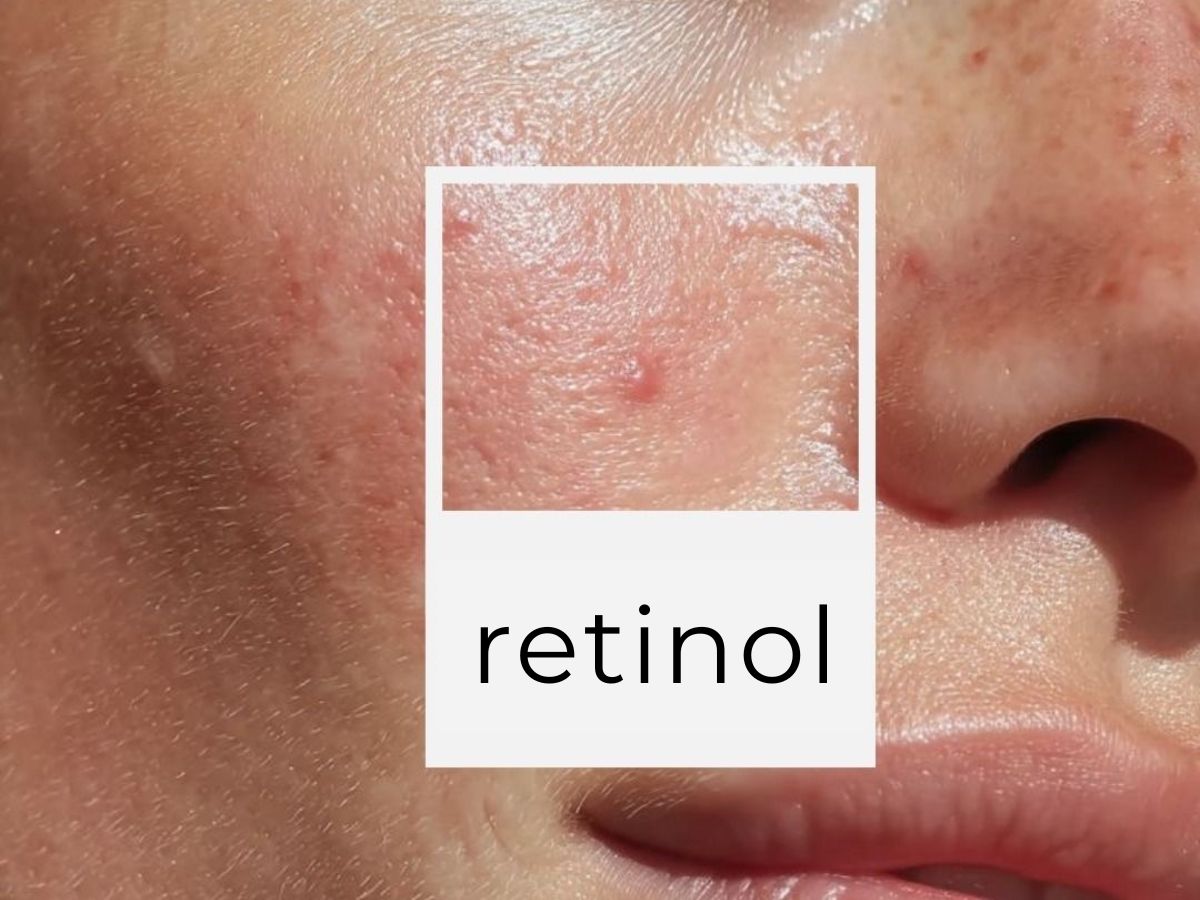
A retinol rash is the most common reason to give up – and it's precisely when skin "rebellions" that retinol begins its real work. Redness, flaking, and new pimples are signs of adaptation, not an allergy. Learn how to distinguish purging from an allergy, how long it lasts, and how to survive it!
What you should know about retinol rash:
Retinol accelerates the exfoliation of epidermal cells – cell renewal cycle It normally lasts about 28 days, but retinol shortens it by up to half. The skin sheds old cells faster, but it also accelerates the extraction of impurities and sebum from pores. This is when new pimples and redness appear, even though you haven't changed your diet or routine.
This deterioration of skin after retinol is a mechanism known in dermatology for years – it's a sign that the active ingredient is doing its job. retinyl retinoate serum We used a form with a lower risk of irritation, which translates into a milder purging process – the adaptive reaction occurs anyway, and that's good.
Purging is the stage where the skin "cleanses" itself under the influence of an ingredient that accelerates cell turnover. Blemishes only appear where you've already had problems – retinol doesn't create new ones, but accelerates the resolution of existing ones. Purging lesions heal faster than typical acne breakouts.
Purging appears in problem areas and heals faster. Breakouts are a reaction to a new product that clogs pores or triggers an allergic reaction – they can appear in areas where the skin previously caused no problems. The key to distinguishing them is location and healing time.
How to distinguish them in practice:
If after 8-10 weeks the skin hasn't stabilized and the reaction worsens, it's worth consulting a dermatologist. Purging usually involves blackheads and small lumps, not widespread inflammation.
Signals that require consultation:
Standard purging lasts 4-8 weeks. The reaction is most severe in the first 2-3 weeks – pimples appear quickly, and it can feel like retinol is damaging. In reality, accelerated cell turnover is occurring. Between weeks 4 and 6, the skin begins to stabilize.
The duration of a retinol rash depends on the concentration and form – retinyl retinoate has a milder effect, so the adaptive reaction tends to be shorter. Skin with a damaged barrier reacts more strongly.
Continuing is the right choice – a break resets the adaptation. Reduce frequency and ensure proper hydration. Discontinue only if you experience allergy symptoms: burning, hives, or swelling.
If retinol side effects are severe, return to less frequent use: every third day instead of daily, gradually increasing the frequency after two weeks. The "sandwich" method (moisturizer – retinol – cream) reduces the intensity of penetration.
Safe retinol introduction regimen:
Hydration is the foundation of surviving purging – skin barrier is then weakened and the skin loses water more easily. Our cream with ceramides with peptides and niacinamide strengthens the barrier, soothes inflammation and supports regeneration.
It is also helpful niacinamide serum – has anti-inflammatory properties, reduces redness, and helps skin stabilize faster. Moisturized skin tolerates retinol much better than dry and irritated skin.
During the breakout, put aside all additional activators. The simpler, the more effective: cleansing, retinol, hydration – and nothing else.
What to avoid when purging:
What should you avoid combining retinol with? AHA/BHA acids and vitamin C in the same application can overload the skin barrier and exacerbate retinol's side effects. Retinol should only be used in the evening because it is photosensitive and sensitizes the skin to UV radiation. The rule: vitamin C in the morning, retinol in the evening. AHA/BHA acids for evenings without retinol, never together.
In the morning: SPF 50 cream. In the evening: cleanse, retinol, moisturizer. Details on how to combine them can be found in the article about retinol in daily care, rules for reactive skin in the article about avoiding irritation and the selection of cosmetics for sensitivity in the article about sensitive skin care.
Purging is one of the few moments in skincare where worse truly is better. Skin that learns to tolerate retinol will reward you in a few weeks with fewer discolorations, smoother texture, and improved elasticity. Giving up at this point is like stopping three kilometers from the finish line.
A retinol rash is a sign that the ingredient is working – the only symptoms that are of concern are allergy symptoms: burning, hives, swelling.
Retinyl retinoate may cause a milder rash – it converts to retinoic acid more slowly, so the adaptive reaction is less intense.
Better not – AHAs/BHAs, by accelerating cell renewal, prolong adaptation. Return to acids once skin has stabilized.
The first 2-4 weeks are the most intense, full stabilization takes 6-8 weeks.
Footnotes: