Retinol creams and retinol serums are often used interchangeably – a mistake that can cost you months of no results. The product's format determines its concentration, depth of action, and tolerance. Find out which format best suits your skin's needs!
Key information about retinol cream and serum:
Retinol cream has a thicker, emulsion-like formula—the retinol is diluted in a moisturizing base. Serums have a lighter carrier (water or silicone) that allows for higher concentrations and deeper penetration. The same amount of retinol in a serum works more intensely than in a cream.
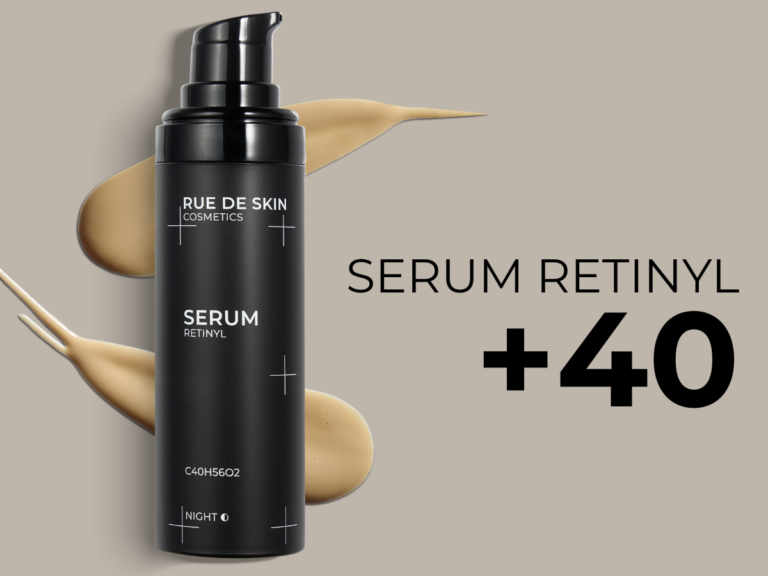
The cream serves as the finishing product of the routine. Retinyl Retinoate Serum, such as our Retinyl Serum, is applied before moisturizing cream – the retinol then comes into direct contact with the epidermis. The order of application affects how much of the active ingredient reaches the skin.
| Characteristic | Retinol cream | Retinol serum |
| Consistency | Thick emulsion | Light, watery or silicone |
| Typical Retinol Concentration | 0.025% – 0.1% | 0.05% – 0.5% and more |
| Depth of action | Superficial | Deeper penetration |
| Irritation potential | Lower | Higher (depends on the form of retinol) |
| A place in routine | At the end (evening) | Before moisturizing cream |
| For whom? | Sensitive skin, beginners | Adapted skin, anti-aging goal |
The cream works best when you're just starting out with retinoids. The low concentration in the cream base gives your skin a boost. time to adapt, and moisturizing and lubricating ingredients minimize irritation in the first weeks.
Retinol cream is especially recommended:
This serum is the perfect choice for skin already accustomed to retinoids and needing a more pronounced boost. A lighter base allows for higher concentrations and deeper penetration, particularly noticeable in reducing wrinkles and discoloration. It's also suitable for combination or oily skin that can't tolerate heavy creams – the serum absorbs faster and doesn't clog pores.
The most effective and least irritating form of retinol in serum is retinyl retinoate – a combination of vitamin A and retinoic acid, acting in a dual manner with higher tolerability than classic retinol. Pure retinol for the face requires conversion to its active form – each step carries a potential loss of activity and the risk of irritation. Leyden et al. (Dermatology and Therapy, 2017) confirmed that the form and stability of the retinoid directly influence tolerability and clinical efficacy.
The concentration of retinol in a good retinol serum is adjusted to the skin's tolerance, rather than maximizing it immediately. 0.025% retinol When used regularly, it brings visible results. For sensitive skin, a start of 0.025–0.05% is safe. The range 0.1–0.2% This is an effective anti-aging zone. Concentrations of 0.25–0.51 TP3T and higher – only for skin accustomed to retinoids, preferably under the supervision of a dermatologist.
In a good retinol serum, it's worth looking for niacinamide, peptides, and soothing ingredients – they determine whether the skin will adapt without irritation and whether the effects will be lasting.
Ingredients worth having alongside retinol:
Retinol requires gradual introduction – start with 1-2 applications per week. After 2-3 weeks without irritation, increase the frequency to 3-4 times. Many experts recommend sandwich method„ – a thin layer of serum between the two moisturizing steps. In the evening, after retinol, cream with ceramides will seal the barrier and minimize the risk of drying out.
In the morning, the skin needs hydration and protection. Niacinamide Serum soothes redness and evens out skin tone. Must use SPF 50 cream – retinol increases the sensitivity of the epidermis to UV radiation.
Order of using retinol in the evening:
For an overview of specific applications, see the article on, What does retinol serum help with?. Why this form of retinol is gaining recognition among dermatologists is explained in an article about retinyl retinoate advanced care. The issue of adaptation and frequency of use is discussed in the text about retinol in daily care.
A retinol cream is gentler and a better start. A serum works more intensively and quickly, but requires skin accustomed to retinoids. The form of retinol—classic retinol or retinyl retinoate—is just as important as the format. Our Retinyl Serum combines retinyl retinoate with peptides, niacinamide, and soothing ingredients (bisabolol, allantoin), creating a formula effective even for reactive skin.
If you're wondering where to start, see for yourself how our Retinyl Serum works!
Combining a cream and serum with retinol can result in overdose and severe irritation – choose one product for the evening.
A low-concentration retinol cream (0.025–0.051 TP3T) is a better start, especially for dry or sensitive skin. After a few weeks of adaptation, you can switch to a serum.
Price doesn't determine effectiveness – what matters more is the form of retinol, its concentration, the stability of the formula, and the light-protective packaging. Cheaper serums with unstable retinol may lose their effectiveness quickly after opening.
Retinyl retinoate works in two ways: it stimulates retinoid receptors and releases retinol in the skin. The effect is comparable to classic retinol, but with a significantly lower risk of irritation and flaking.
Footnotes: