
After hyaluronic acid, retinoids are another cosmetic ingredient that has been much talked about recently. Retinol In daily care, it's an effective anti-aging solution that improves skin condition. Find out how retinol works and how to safely incorporate it into your skincare routine!
Key facts about retinol:
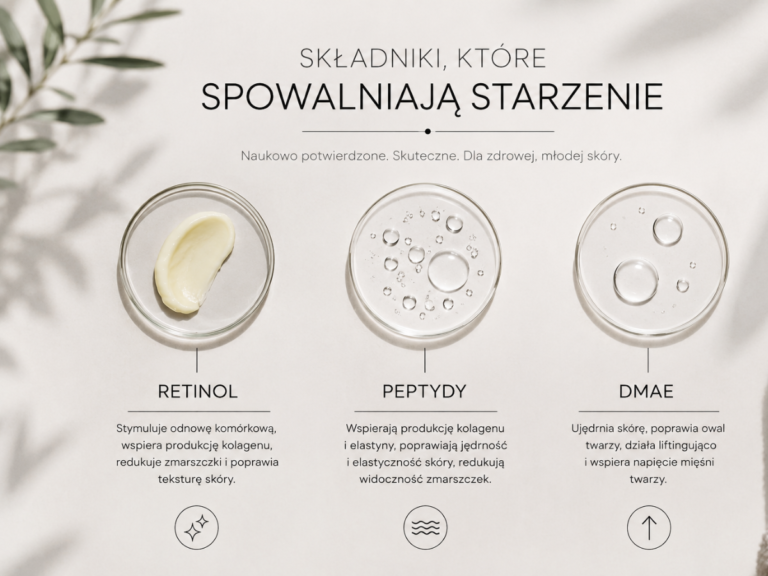
Retinol is one of the most active forms of vitamin A in cosmetics. When applied to the skin, it converts to retinoic acid, which directly affects cells. This single conversion step makes it more effective than milder derivatives and safer than prescription tretinoin.
Retinol activates nuclear receptors that regulate collagen production, epidermal renewal and melanin breakdown. It accelerates the cell life cycle from 28 to 14-21 days. The skin gets rid of dead layers faster, and visible effects, smoother texture and lighter color, appear after 4-6 weeks.
Retinol reduces wrinkles primarily by stimulating the synthesis of type I and III collagen. Research published in the Archives of Dermatology confirms the effectiveness of 24 weeks of retinoid therapy. Wrinkles under the eyes and facial lines on the forehead respond particularly well to retinol because the skin in these areas is thin and absorbent. First wrinkles they appear there, and early incorporation of retinol helps slow down their deepening.
In the case of discoloration, retinol inhibits the transport of pigment to the upper layers of the epidermis. Sun and acne spots fade after 8-12 weeks.
The main effects of retinol on the skin:
Retinol is suitable for people over 25 years of age who are showing the first signs of aging. It is particularly beneficial for facial wrinkles, discoloration, and loss of firmness. However, remember about contraindications.
When not to use retinol:
It's important to remember that cosmetic products don't have to undergo the same rigorous testing as medications. Retinoids can cause side effects.
Skin irritation may occur, especially when first using cosmetics containing retinol or its derivatives. A common side effect of retinoid use (at the beginning) is the so-called. retinol rash, That is the appearance of more imperfections on the skin. This is not a reason to stop using retinol cream.
Additionally, these products should be used with caution around the eyes as they can cause eye irritation and dry eye syndrome. Also, remember with proven fetal damage – all cosmetics containing retinoids should be discontinued no later than after a positive pregnancy test result.
Retinol is ten times less biologically active than retinoic acid (tretinoin). Maximum allowable concentrations in cosmetics retinol concentration is 0.3%. Retinol is one of the most researched cosmetic ingredients. However, published studies have limitations, including the authors' affiliations with the brands sponsoring the studies, the lack of control groups, and the diversity of study groups and tools used to assess effects.
Another challenge for cosmetics manufacturers is the need to stabilize retinol, because we know that its molecule is sensitive to the effects of light, heat, and air.
Retinaldehyde As a precursor to retinoic acid, it is considered the most effective ingredient commercially available in cosmetics. A concentration of 0.051 TP3T is effective and well-tolerated. Research is ongoing to encapsulate retinaldehyde in a nanoparticle to protect it from photooxidation.
Retinyl palmitate It is a thermostable alternative to retinol in cosmetics. Its disadvantage is its greater susceptibility to damage from UVA and UVB rays. The recommended concentration is 0.051 TP3T in body care products and 0.31 TP3T in facial creams or serums.
There is a lack of good quality scientific studies confirming the effectiveness of this form. There is no doubt that it should be used retinoids in your care routine, use them at night, and during the day use products with SPF at least 30.
The most effective and at the same time gentlest form is retinyl retinoate. Retinyl retinoate is a hybrid derivative combining a retinol molecule with retinoic acid. It does not require multi-stage enzymatic conversion, acts directly on skin receptors and induces much less irritation than classic retinol. The choice of form depends on experience with active ingredients and skin sensitivity.
Comparison of retinoid forms in cosmetics:
| Form | Effectiveness | Irritations | For whom? |
| Retinyl palmitate | Low | Minimal | Beginner |
| Retinol | Medium-high | Moderate | People with experience |
| Retinyl retinoate | High | Low | Sensitive skin, after treatments |
| Tretinoin (Rx) | The highest | High | Under medical supervision |
Our serum offers all the benefits of retinol—regeneration, firming, and wrinkle reduction—but in a gentler form. Thanks to retinyl retinoate (0.3%), you get the effectiveness of classic retinol without the typical peeling and redness, further supported by peptides and protective vitamin E.
Input and use of retinol requires a step-by-step approach, as starting too aggressively can result in redness and peeling. Choose a product with a concentration of 0.1-0.31 TP3T and apply in the evening to dry skin. Our retinyl serum from the Advanced line contains 0.3% retinyl retinoate with peptides and niacinamide, which supports skin adaptation.
Step-by-step retinol introduction schedule:
The type of retinol cosmetic we choose doesn't really matter. It can be a retinol cream or a retinol serum. What matters is regular use and proper application of the product – remember that retinoids should be applied in the evening, on dry skin.
Niacinamide is the best partner for retinol because it soothes irritations and strengthens the skin barrier. Ceramides and peptides are other ingredients that support retinoid therapy. It's equally important to know what to avoid in your evening routine.
Safe and risky combinations with retinol:
Those with extremely sensitive skin will benefit from the so-called sandwich method of applying retinoids. First, apply a moisturizer to dry skin (it's important that it doesn't contain active ingredients that have the potential to irritate). Once the moisturizer has absorbed, apply a retinol cream or serum, wait for it to absorb, and finally apply another layer of moisturizer.
No, retinoid cosmetics should be applied to the face, neck, décolleté, and entire body. It's important to remember to use full sun protection and choose the appropriate retinol/retinal concentration – see below.
Appropriate selection retinol serum This is the key to visible results without irritation. Pay attention to the concentration, form of retinoid, and additional ingredients. Our products, created in collaboration with aesthetic medicine specialists, combine scientific knowledge with in-office experience.
Yes, retinol can be used year-round as long as you use SPF 30+ daily and avoid prolonged sun exposure.
Smoother texture and brighter tone appear after 4-6 weeks. Full wrinkle reduction requires 12-24 weeks of regular use.
Yes, but not in the same evening routine. Use vitamin C in the morning and retinol in the evening for synergistic antioxidant and anti-aging benefits.
In the clash retinal vs. retinol the former often wins in the care of reactive skin, because despite its stronger anti-wrinkle effect, it has a lower irritating potential and copes better with imperfections, which makes it a more effective and safer choice to start with.
Start with retinyl retinoate or retinol in a concentration of 0.1-0.31 TP3T. These forms allow the skin to acclimate to the ingredient without irritation.
Footnotes: