
What are the benefits of vitamin C on the face? Brightening, firmness, and protection are just the beginning. This active ingredient works deeply and comprehensively: it evens out skin tone, strengthens skin structure, and supports natural cellular immunity. If you're looking for a serum that truly makes a difference, it's worth knowing what to look for in the ingredients and when to expect results.

The most important information about vitamin C serum:
Traikovich (1999) emphasized that Topical ascorbic acid improves the topography of photodamaged skin, including smoothing wrinkles and reducing the visibility of sun spots. In a randomized study by Fitzpatrick and Rostan (2002), the serum vitamin C showed a significant advantage over placebo in improving skin firmness and reducing the symptoms of photoaging, especially on the cheeks and around the eyes.
All these effects are the result increasing the synthesis of collagen types I and III, inhibition of the activity of enzymes that degrade the extracellular matrix and the neutralization of free radicals.
Vitamin C inhibits the activity of tyrosinase, an enzyme crucial for melanin production. slows down the formation of new discolorations and helps brighten existing ones. This action is not aggressive, as with exfoliating acids, but physiological and mild, which means that vitamin C can be used even by people with sensitive skin.
Humbert and Fitzpatrick's studies showed that regular application of vitamin C serum led to a reduction in the intensity of discolorations, improved uniformity of skin tone and increased resistance to oxidative stress – also in the case of skin with signs of aging and photodamage.
Vitamin C serum is suitable for almost all skin types, but it is particularly beneficial for skin types:
By care for very sensitive skin It is worth reaching for formulas with a lower concentration of vitamin C or its derivatives (e.g. sodium ascorbyl phosphate).
How to use vitamin C? It's best to do this in the morning, on cleansed and dry skin. This is the time of day when we are exposed to external factors: UV radiation, smog, and oxidative stress. The antioxidant properties of vitamin C support skin protection against these harmful stimuli, increasing the effectiveness of photoprotection.
After applying the serum, it is worth waiting 2-3 minutes before applying cream or SPF to give the ingredients time to penetrate and stabilize on the skin's surface.
Vitamin C works well with:
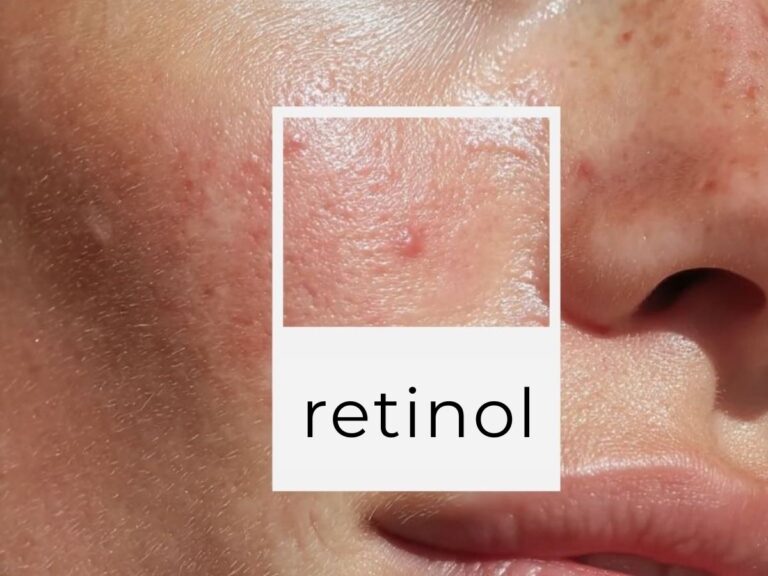
It is worth separating it with retinol – vitamin C in the morning, retinol in the evening. Both ingredients work intensively and work best when they don't compete in the same application.
The combination of vitamin C with hyaluronic acid allows for both antioxidant and moisturizing effects. Hyaluronic acid binds water in the epidermis, enhancing the skin's smoothing and elasticity. It also improves the penetration of vitamin C, which acts deeper and more effectively.
Formulas containing both ingredients are highly recommended for dehydrated, tired and uneven skin tone – not only brighten, but also restore elasticity.
Ferulic acid stabilizes vitamin C and increases its effectiveness – up to twofold. It acts as strengthening the antioxidant system, neutralizing free radicals and reducing the effects of UV exposure. In a study by Oresajo et al. (2008), a combination of vitamin C, ferulic acid, and phloretin significantly reduced sun damage at the cellular level.
This shows that Cosmetic photoprotection does not end with the SPF filter – antioxidants in the serum protect the skin at the level of deeper structures.
The best vitamin C serum should contain it in a stable form, preferably with the addition of ferulic acid and vitamin E – this combination protects the formula against oxidation and supports the anti-aging effect.
Serum C / E / Ferulic is an advanced serum with vitamin C and E, ferulic acid, hyaluronic acid and panthenol. Its action:
The formula was designed with mature, tired skin, with uneven skin tone or signs of photoaging.

The first results of skin brightening and improved tone can be seen after approximately 4 weeks of regular use. Full improvement – depending on the depth of discoloration – usually appears after 8–12 weeks. It's worth noting that consistency and UV protection (SPF) are crucial to maintaining results.
Yes, daily use in the morning yields the best results. Combining it with an SPF cream is key.
Yes, if used in high concentrations and without a suitable buffer. It's a good idea to start with 1-2 times a week and increase the frequency.
The first changes in color are visible after approximately 3–4 weeks, full brightening and improved elasticity – after 8–12 weeks.
The choice depends on your needs, but it's worth knowing, How is vitamin C serum different from cream? – the serum is a concentrated „shot” of active ingredients with a light formula that reaches deeper and works more intensively, while the cream mainly serves a protective function and seals in the moisture in the epidermis.
Yes – modern formulas and research confirm the lack of contraindications combining vitamin C with niacinamide.
Indirectly, yes – by stimulating collagen synthesis and neutralizing free radicals that accelerate the aging process.
Footnotes: