Acne is a problem that many people associate solely with adolescence. Unfortunately, the reality is different – skin lesions can also appear in your thirties, forties, or even fifties, taking a completely different form than teenage acne. Instead of blackheads and typical breakouts, mature skin often struggles with persistent redness, dilated capillaries, and painful lumps. Why does mature skin become problematic, and how can you effectively manage this chronic condition? Find out what you need to know about mature acne and how to control it.
Acne and mature skin – is it possible?
Acne is often associated with puberty, but the problem can also affect people in their 30s, 40s, and even 50s. Mature acne, also known as adult acne, appears in people who didn't have acne problems in their youth, as well as in those who struggled with acne in their teens, but the problem recurred years later. Hormonal changes aren't the only cause; environmental factors, stress, diet, and poor skincare also play a significant role. Skin lesions in adults often take the form of painful, subcutaneous lumps and nodules, which are difficult to treat with traditional acne treatments.
What are the causes of acne in people in their 30s and 40s?
Adult acne is the result of many factors, both internal and external. The most common causes include:
Hormonal disorders – fluctuations in hormone levels, especially androgens, can lead to overproduction of sebum and the formation of imperfections.
Chronic stress – affects the increased secretion of cortisol, which stimulates the sebaceous glands to work more intensively.
Inappropriate diet – excessive consumption of processed foods, sugar, dairy products and trans fats can increase inflammation in the body and contribute to the development of acne.
Improper skin care – using aggressive, drying cosmetics or too heavy, comedogenic formulas can lead to clogged pores.
Environmental pollution – toxins, smog and dust deposited on the skin can cause inflammation and exacerbate acne lesions.
Chronic diseases – Thyroid problems, insulin resistance or polycystic ovary syndrome (PCOS) are often associated with the occurrence of acne in adults.
Adult acne is rarely the result of just one cause – usually there are several factors that combine to create imperfections.
Differences between teenage acne and adult acne
Although both adolescent and adult acne present with skin lesions, there are significant differences between the two types of acne:
Location of changes – in teenagers, acne most often appears in the T-zone (forehead, nose, chin), while in adults, lesions occur mainly in the lower part of the face (jaw, chin, and around the mouth).
Type of pimples – younger people tend to have blackheads and pimples, while adults are more likely to experience painful, subcutaneous lumps and inflammatory cysts.
Causes During adolescence, the main culprit is the hormonal changes associated with puberty. In adults, acne has a more complex cause – it can be influenced by hormones, stress, lifestyle, diet, and skincare.
Response to treatment – teenage acne often responds well to antibacterial drugs and exfoliating acids (e.g. salicylic acid), while adult acne requires a more comprehensive approach – hormonal treatment, diet and care that supports the skin’s hydrolipid barrier are often crucial.
Discolorations and scars – mature skin has a slower ability to regenerate, which is why adult acne is more likely to leave discolorations and scars that are more difficult to remove.
Understanding the differences between these two types of acne allows for more effective treatment and care options.
Hormones and mature skin acne – a key factor?
One of the main factors contributing to adult acne is hormones. Fluctuating levels of androgens, such as testosterone, can lead to overactivity of the sebaceous glands, resulting in oily skin and inflammation.
In women, adult acne often flares up at certain times during the menstrual cycle, as well as during pregnancy, menopause, and after stopping hormonal contraception. Women with hormonal disorders are particularly at risk, such as:
Polycystic ovary syndrome (PCOS) – increased production of androgens promotes the development of acne, oily skin and excessive hair growth.
Hypothyroidism – slowed metabolism and weakened skin regeneration can lead to skin problems.
Menopause – a drop in estrogen levels causes the skin to lose moisture and become more susceptible to imperfections.
Hormonal causes of acne in mature skin often require the support of an endocrinologist and the selection of appropriate therapy, e.g. the use of hormonal contraception, inositol supplementation, or a diet supporting hormonal balance.
External factors that influence the formation of imperfections
Hormones aren't the only factors that influence skin condition – daily habits and the environment can also exacerbate acne problems in adults. Among the most important external factors are:
Air pollution – smog, dust and exhaust fumes can settle on the skin, causing clogged pores and increasing inflammation.
Comedogenic cosmetics – heavy creams, oily foundations and not removing makeup thoroughly can contribute to clogged pores.
Inadequate care – cosmetics that are too aggressive may weaken the skin’s hydrolipid barrier, which paradoxically leads to increased sebum production.
Stress and lack of sleep – increased cortisol levels increase sebum production and promote inflammation.
A diet high in sugar and dairy – some studies suggest that excess simple sugars and dairy products may worsen acne by stimulating the secretion of insulin and IGF-1, which stimulates the sebaceous glands.
Avoiding these factors and conscious care can significantly improve the condition of your skin and reduce the frequency of imperfections.
Symptoms of acne in mature skin
Unlike teenage acne, mature acne is characterized by a chronic course and a tendency to recur. The most common symptoms include:
redness of the skin, mainly in the central part of the face,
telangiectasia, i.e. dilated blood vessels,
papules and pustules, which often appear without the presence of blackheads,
burning sensation and skin hypersensitivity,
facial swelling, which in advanced cases may take the form of Morbihan disease.
Affected skin often reacts with irritation to many factors, such as sun, stress, alcohol, and spicy foods. Acne in adults can also lead to low self-esteem and psychological problems.
How to properly diagnose acne in mature skin?
Mature acne is often confused with other dermatological conditions, which can make it difficult to treat properly. Symptoms can resemble atopic dermatitis, seborrheic dermatitis, or contact allergies.
consult a dermatologist who will assess the condition of your skin,
perform hormonal tests if the changes are related to the menstrual cycle or menopause,
observe the skin's reaction to cosmetics and external factors.
Correct diagnosis is crucial for effective treatment, so people with chronic skin lesions should have their skin condition regularly checked by a specialist.
Acne treatment
Acne treatment in adults should be comprehensive and tailored to the individual needs of the patient. Pharmacological methods include both oral medications and topical preparations.
The most commonly used substances in the treatment of adult acne are:
Tetracycline antibiotics (doxycycline, minocycline) – have anti-inflammatory effects and may reduce the severity of symptoms,
Metronidazol (ointment or gel) – has antibacterial and anti-inflammatory properties,
Azelaic acid – reduces redness, has antibacterial properties and supports exfoliation of the epidermis,
Isotretinoin – used in the case of stubborn acne, it reduces sebum production and has a strong anti-inflammatory effect.
The decision to implement pharmacological treatment is always made by a doctor, taking into account the severity of skin lesions and the patient's general health.
How to care for acne-prone skin after 30?
Skincare is crucial in treating acne in mature skin. It's crucial to use gentle yet effective products that don't irritate the skin and support its protective barrier.
In daily care it is worth:
avoid aggressive cleaning agents containing SLS,
choose gentle cleansing gels and emulsions with a moisturizing effect,
use creams containing ceramides and hyaluronic acid, which help rebuild the hydrolipid barrier,
avoid cosmetics containing alcohol, menthol and essential oils, which can lead to irritation and aggravation of skin lesions.
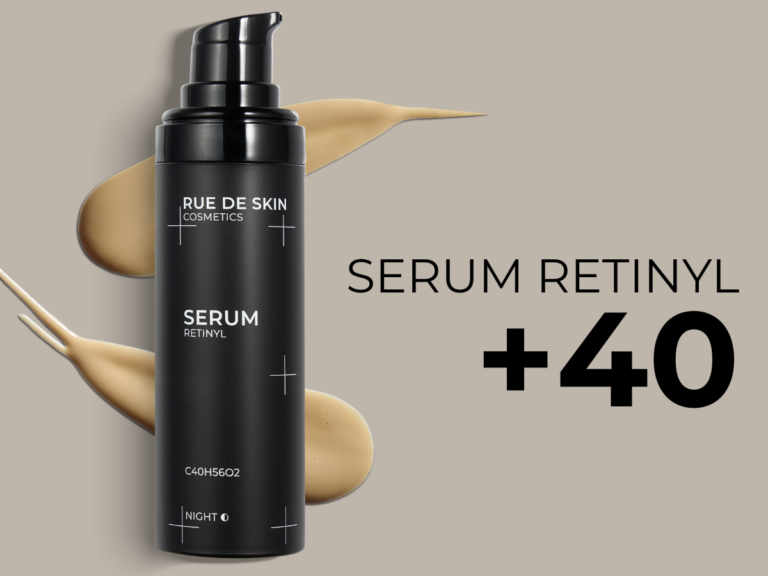
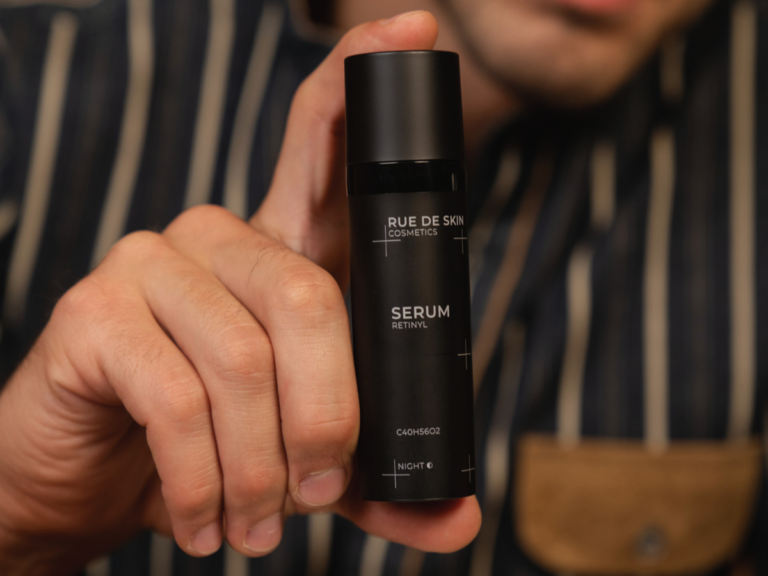
Retinyl Retinoate Serum This is the perfect solution for mature skin with imperfections. It combines the effectiveness of retinoids with a gentle action, minimizing the risk of irritation.
Thanks to the modern formula Advanced The serum gradually releases active ingredients, providing effective care without irritation. Perfect for an evening routine, regular use helps maintain clean, supple, and radiant skin. Proper care supports dermatological treatment and can significantly reduce the risk of acne flare-ups.
Mature skin acne – why does it recur and how to treat it?
Mature acne is a chronic condition that requires a multifaceted approach to treatment. Its symptoms can significantly impact quality of life and well-being, so early diagnosis and effective treatment are crucial. Proper skin care, a healthy lifestyle, and avoiding triggers can significantly improve skin condition and reduce the risk of recurrence. Regular consultations with a dermatologist and adherence to treatment recommendations allow for effective acne symptom control and long-term skin health.
Footnotes:
Gawęda, A. (2023). Rosacea – a modern view of diagnostics and treatment. Journal of Education Health and Sport, 46(1), 258-272. https://doi.org/10.12775/jehs.2023.46.01.018
KARWAŃSKA, A., KULBAT, A., ŚWIERCZ, K., GÓRSKA, D., MAJCHER, M., KULBAT, M., … & Małgorzata, S. (2023). The impact of physical activity, diet and stress on acne vulgaris. pathogenesis and therapeutic procedures. Journal of Education Health and Sport, 13(3), 18-23. https://doi.org/10.12775/jehs.2023.13.03.002
Kacper, K., HOP, I., Justyna, B., Barbara, O., MATYSEK, M., OLSZANICKA, A., … & Adam, G. (2023). Co2 ablative fractional laser – mechanism of action and assessment of safety, effectiveness in the treatment and possible side effects based on a review of scientific literature. Journal of Education Health and Sport, 21(1), 72-77. https://doi.org/10.12775/jehs.2023.21.01.008
Wieteska, M., Maj, D., Gorecka, A., Gorajek, A., Wacławska, M., & Chałupnik, A. (2022). The role of demodex folliculorum in pathogenesis of rosacea. Journal of Education Health and Sport, 12(6), 105-111. https://doi.org/10.12775/jehs.2022.12.06.010