
Oily skin in your twenties becomes dry in your fifties – without any skincare mistake, because skin changes with hormones and cellular aging. A cream that regulated sebum in your twenties can cause dryness and tightness in your forties. Many people use the same products for years, not realizing their skin needs something different. Find out how skin type changes with age and which active ingredients to choose for each decade!
Key information about skin changes with age:
In a review of changes in aging skin, Farage and co-authors demonstrated that skin thickness and collagen density decrease by approximately 1% per year after the age of 25. The effects accumulate over the years, with visible changes appearing after a decade of accumulated loss.
Androgens in the twenties stimulate the sebaceous glands – hence the oily and acne-prone skin. After menopause, the drop in estrogen levels deprives the skin of moisture., and oily skin becomes dry.
In my twenties the key is protection and prevention; after the age of forty – barrier reconstruction and collagen stimulation. Genes and the environment also modify the pace of changes – Epigenetics in cosmetology explains how lifestyle affects skin aging.
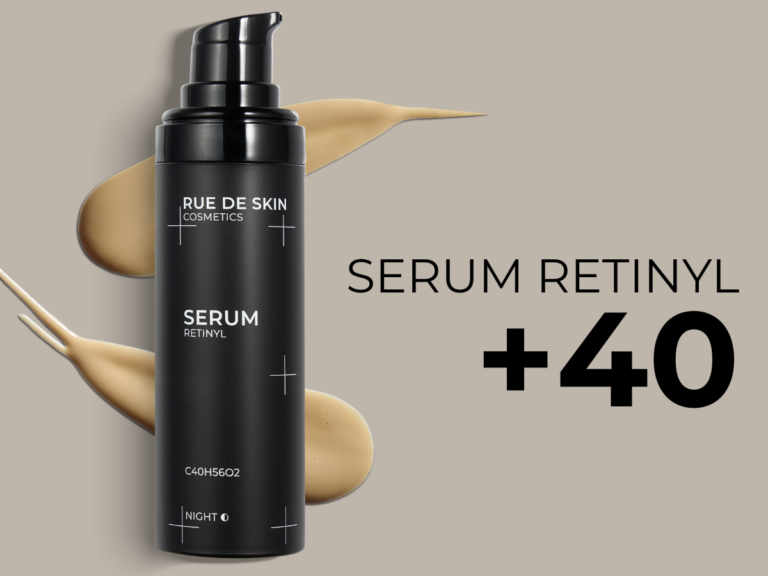
Your twenties are the time when your sebaceous glands are at their most active – your skin is usually oily or combination, prone to clogged pores. It will work well with your first anti-aging ingredients. retinyl retinoate serum – a milder form of retinol, suitable for skin that does not yet require intensive interventions.
Care priorities after the age of 20:
Thirty brings the first structural changes – fine lines, less elastic cheeks, the first discolorations. Ceramides and peptides become important here – face cream with niacinamide with ceramides strengthens the barrier, and peptides support collagen synthesis.
After the age of forty, the hydrolipid barrier weakens and the skin becomes thinner and more reactive. The face oval loses its definition, because collagen and hyaluronic acid are not replenished naturally. The area below the jaw ages even faster – neck and décolleté after 40. require separate care.
Key ingredients after 40:
After the age of sixty, the barrier is severely weakened and discoloration accumulates over decades of UV exposure. Intensive hydration, ceramides and peptides are the pillars of care in this decade.
The first sign is a cream that worked for years suddenly stops moisturizing all day long—or a reaction to previously safe products. Knowing how skin type changes with age helps you catch this moment before minor problems develop.
Signals indicating the need to change your care routine:
Niacinamide works effectively at every stage: it regulates sebum after the age of 20, lightens discolorations after the age of 30, strengthens the barrier after the age of 40. That is why it is the basis of our niacinamide serum – in a concentration of 10%, reinforced with kojic acid targeting discoloration.
Active ingredients in specific life stages:
In the morning, protection—antioxidant serum, cream with ceramides, and SPF. In the evening, repair—retinol or retinyl retinoate under a richer cream with peptides.
The skin needs minimum 4-6 weeks, to visibly react to a new ingredient – change one product at a time. When choosing facial care cosmetics, it is worth combining products from different categories into a coherent application rhythm.
Effective barrier protection relies on ceramides and avoiding detergents with sulfates. Apply cream immediately after washing your face – moist skin absorbs ingredients better, and the barrier of mature skin requires constant support. At Rue de Skin, we create formulas tailored to the needs of skin in every decade – from preventative care to intensive repair. Check out our offer and choose care that suits your skin's current needs!
Skin type changes under the influence of hormones and cellular aging – oily skin in your 20s may become combination skin in your 30s and dry skin after menopause.
Retinol or retinyl retinoate is a priority after the age of thirty – it stimulates collagen prophylactically, supplemented with niacinamide and hyaluronic acid.
Ceramides to rebuild the barrier, collagen-stimulating peptides, and retinyl retinoate as a safe form of retinol for more sensitive skin.
Intensive hydration with hyaluronic acid, ceramides and barrier-rebuilding lipids – post-menopausal skin needs support on many levels.
Ceramides, retinol and SPF used systematically actually slow down the rate of visible changes and prolong the good condition of the skin.
Introduce one product at a time and monitor your skin for 2-4 weeks – for sensitive skin, start by using it every other day.
Footnotes: