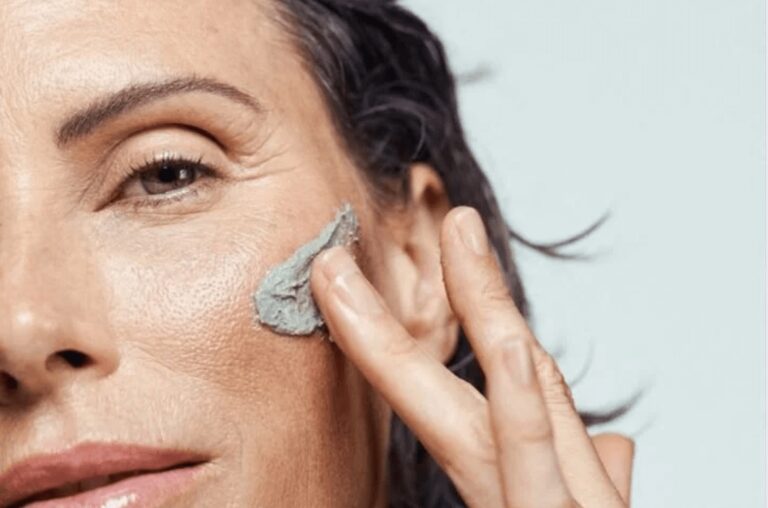
The skin around the eyes is as thin as tissue paper, and many of us apply the same serum to it as we do to the rest of our face. This leads to stinging and discouragement with retinoids after just a few weeks. Retinoids under the eyes can be effective, but require lower concentrations and a bit more patience. Learn how to introduce them so your skin benefits, not rebels!
Key facts about eye retinoids:
- The skin around the eyes is 3-5 times thinner than the skin on the cheeks and reacts faster to each active ingredient.
- Safe concentrations start from 0.01-0.03% retinol or 0.1-0.3% milder derivatives.
- The most common mistake is increasing the frequency too quickly – the skin needs 4-8 weeks to adapt.
- SPF in the morning is essential, without it retinoids do more harm than good.
What are retinoids and how do they affect the skin?
Retinoids are a group of vitamin A derivatives that influence skin cell function: they accelerate cell renewal, stimulate collagen production, and regulate sebum production. In practice, this translates into a smoother texture, fewer fine lines, and a more even skin tone after several months of use.
Canadian dermatologist Sandra Kallio, writing in the journal Dermatologic Surgery (2015), described that vitamin A derivatives produce measurable results after just 12 weeks, but peak results are not seen until month 6. This is a good indication not to judge a retinol serum after two weeks. Retinyl Serum We base our formula on a milder form of vitamin A derivative with peptides and niacinamide to minimize the risk of irritation.
Retinol, retinal, retinyl retinoate – what is the difference?
The difference lies in the number of steps the skin takes to convert the molecule into its active form. Retinol requires two conversions, retinal requires one, and retinyl retinoate releases the retinol gradually. For under-eye care, gentler forms are usually chosen—low-concentration retinol or retinyl retinoate.
Why does the eye area require a different approach?
The skin around the eyes is 0.3 to 0.5 mm thick, several times thinner than the skin on the cheeks. It also has fewer sebaceous glands, a weaker protective barrier, and more tiny blood vessels just below the surface. Each active ingredient penetrates deeper and is more visible here.
British dermatologist Susan Mayou, writing in the Journal of the European Academy of Dermatology and Venereology (2013), described that irritation in this area appears twice as fast as on other parts of the face. We blink over 15,000 times a day, so the skin around the eyes is constantly stretched – which is why thick layers of retinoid are not applied there.
What distinguishes the eye area from the rest of the face:
- Cuticle thickness – 0.3-0.5 mm instead of the standard 1.5-2 mm.
- The lipid barrier is weaker, water evaporates faster.
- A dense network of vessels makes redness more likely to occur.
- The lack of sebaceous glands along the eyelash line limits natural lubrication.
- Constant muscle movement accelerates the formation of fine lines.
- Greater sensitivity to salt, alcohol and irritating preservatives.
Can retinol be applied under the eyes?
What concentration of retinoid should I choose for under the eyes?
The safe concentration of retinol starts at 0.01% and reaches a maximum of 0.1% in experienced skin. Most ready-made eye creams and serums containing retinol fall in the 0.02-0.05% range, and that is a good starting point. Cosmetic retinol from the shelf is always lower than the forms from a dermatologist.
Retinyl retinoate – the gentlest option
Retinyl retinoate combines retinol with retinoic acid into one molecule and gradually releases the active form. The effect is comparable to classic retinol, with less irritation. Korean researchers led by H. Kim in the British Journal of Dermatology (2010) showed that a concentration of 0.06% retinyl retinoate produced effects comparable to 0.075% retinol, with less discomfort. For details, see the text about retinyl retinoate advanced care.
Retinal under the eyes – isn't it too strong?
Retinal is more potent than retinol and can be too intense for beginners around the eyes. It's best to try it after a few months of using milder forms.
What effects does retinol give under the eyes?
Wrinkles and crow's feet
Retinoids stimulate fibroblasts (collagen-producing skin cells) to produce collagen and elastin. Crow's feet usually respond to regular use after 8-12 weeks. The deep furrows won't disappear, but the skin's surface becomes smoother and reflects light differently.


Dark circles under the eyes
Dark circles have different origins, and not all types respond best to retinoids. Dark circles resulting from thin, transparent skin, where blood vessels are visible, respond best. Retinoids thicken the epidermis and improve skin density, making blood vessels less visible. Dark circles originating from bone structure respond least readily, and are better treated with hyaluronic acid treatments. Also, check out:, What does retinol serum help with? – we described it in a separate text.
Loss of firmness
The skin around the eyes and eyelids loses its elasticity faster than the rest of the face. Retinoids slow down this process by stimulating collagen, but the lifting effect is subtle. It’s also worth considering neck care. Our neck and décolleté cream contains DMAE (a component that improves skin elasticity), peptides and panthenol.
How to apply retinoid under the eyes to avoid irritation?
The key is small amounts, low frequency, and barrier support. Just an amount about the size of half a grain of rice is enough, applied to the orbital bone, half a centimeter from the lash line. After the retinoid, apply cream with ceramides, which will rebuild the barrier.
Application step by step:
- Cleanse your skin with a mild gel and dry it gently.
- Wait 10-15 minutes until the skin is completely dry.
- Apply a minimal amount of retinoid in the orbital cube, avoiding the lash line.
- Give the product 5 minutes to work before reaching for your moisturizer.
- Finish with a barrier cream to minimize dryness.
At what age should you start using retinoid under your eyes?
The most common question is: at what age is retinol beneficial for the eye area? Fine lines usually first appear between the ages of 25 and 30, so it's a good time for preventative care. After 30, retinoids help maintain skin density, and after 40, they help combat more visible changes. More on this topic:, is retinol safe after 40, can be found in a separate article.
Retinol for couperose skin is not prohibited, but requires greater caution. Thin capillaries react with redness, so it is best to choose gentle forms of retinyl retinoate at a concentration of 0.01-0.03% and apply it once a week for the first 4-6 weeks.
Signs it's time to slow down:
- Burning sensation lasting longer than 30 minutes after application.
- Visible flaking and tightening of the skin around the eye.
- Redness that doesn't go away 24/7.
- Burning sensation when applying moisturizer.
Retinoids under the eyes – gently but effectively
The skin around the eyes responds beautifully to retinoids if given time. Consistency yields the best results: a low dose, regular use, and sunscreen throughout the day. Retinoids can cause sun sensitivity, so without Reboot SPF 50 Even the best care can work against your skin.
FAQ: Frequently asked questions about eye retinoids
Can retinol under the eyes worsen dark circles?
At the beginning of use, temporary redness and slight darkening of the skin may occur, which disappears after 2-4 weeks of adaptation.
Can I use retinol under my eyes every day?
Daily application is only possible after several months of regular use, when the skin has fully adapted.
Retinol under the eyes in the morning or evening?
Retinoids are photosensitive, so they should only be used in the evening, and in the morning, be sure to apply an SPF 30 or higher sunscreen.
Does retinol under the eyes help with puffiness?
Retinoids do not reduce puffiness directly, but the long-term improvement in skin density makes the eye area look tighter.